← All work

Commerce·2026

lekka.link

A link-in-bio page for South African creators and small businesses that sells, takes bookings and builds an audience, with sales paid in rand straight into the seller's own bank.

Client
NewBranch (in-house product)
Role
Product, design, engineering
Sector
Commerce
Status
Pre-launch, payments not yet live
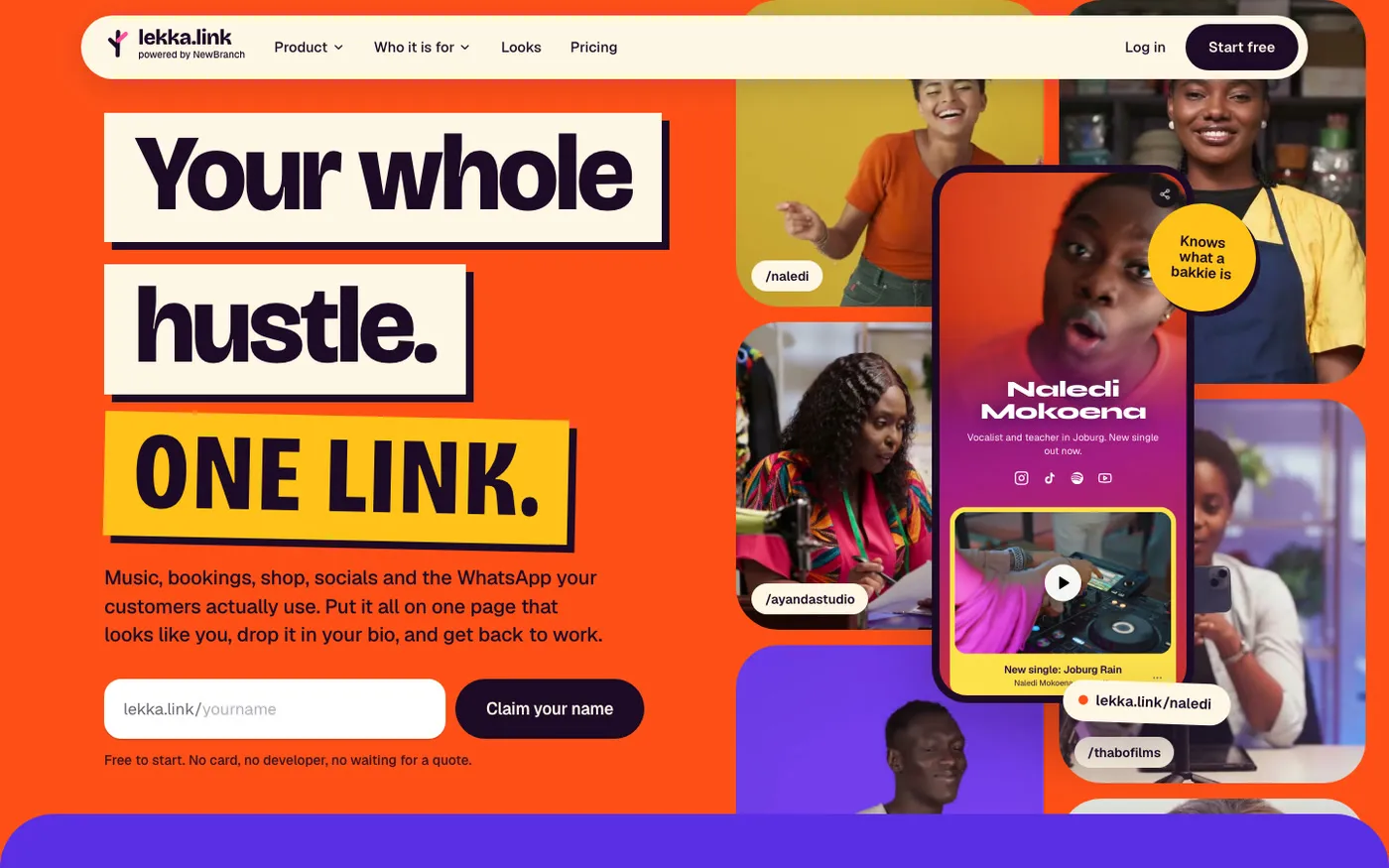
lekka.link home page

The challenge

Creators and small businesses stitch together a link page, a shop, a booking tool and a mailing list. None of them share a customer list, and few handle local payments well.

Our approach

One page for links, shop, bookings, downloads, forms and subscribers, built as a Go service on Neon Postgres with Paystack split payments. We put it through three independent reviews before a live payment key went anywhere near it.

In brief

R0

of seller money held by us; each sale settles to the seller's bank

3

independent reviews before the live payment key went in

0

serious or critical accessibility failures across 580 screen states, down from 64

What it does

One page, one customer list, local payments.

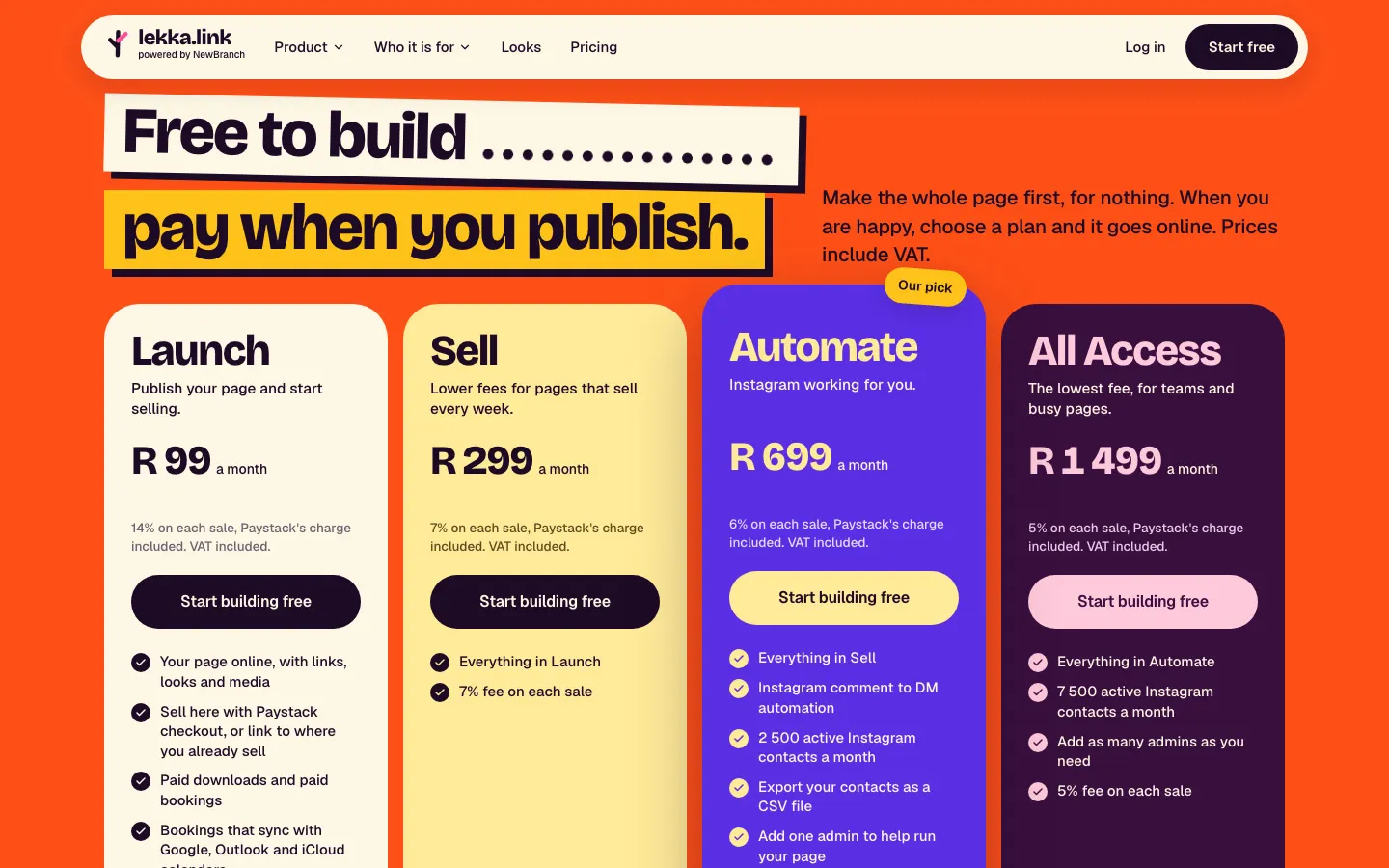
A seller builds one page with links, a shop, free and paid downloads, bookings with deposits, forms and a subscriber list, plus short links, QR codes and insights. Buyers pay through Paystack's own checkout in rand, and the money goes to the seller's bank account. Plans are a monthly fee plus a small per-sale percentage, and it is free to build but paid to publish.

Instagram automation that replies to comments and messages is built, but stays switched off until it has been tested on a live account. Calendar sync works with Apple Calendar and subscribe links today; Google and Outlook are marked as coming. Courses and some planned social features are not built, and the product says so rather than showing a placeholder.
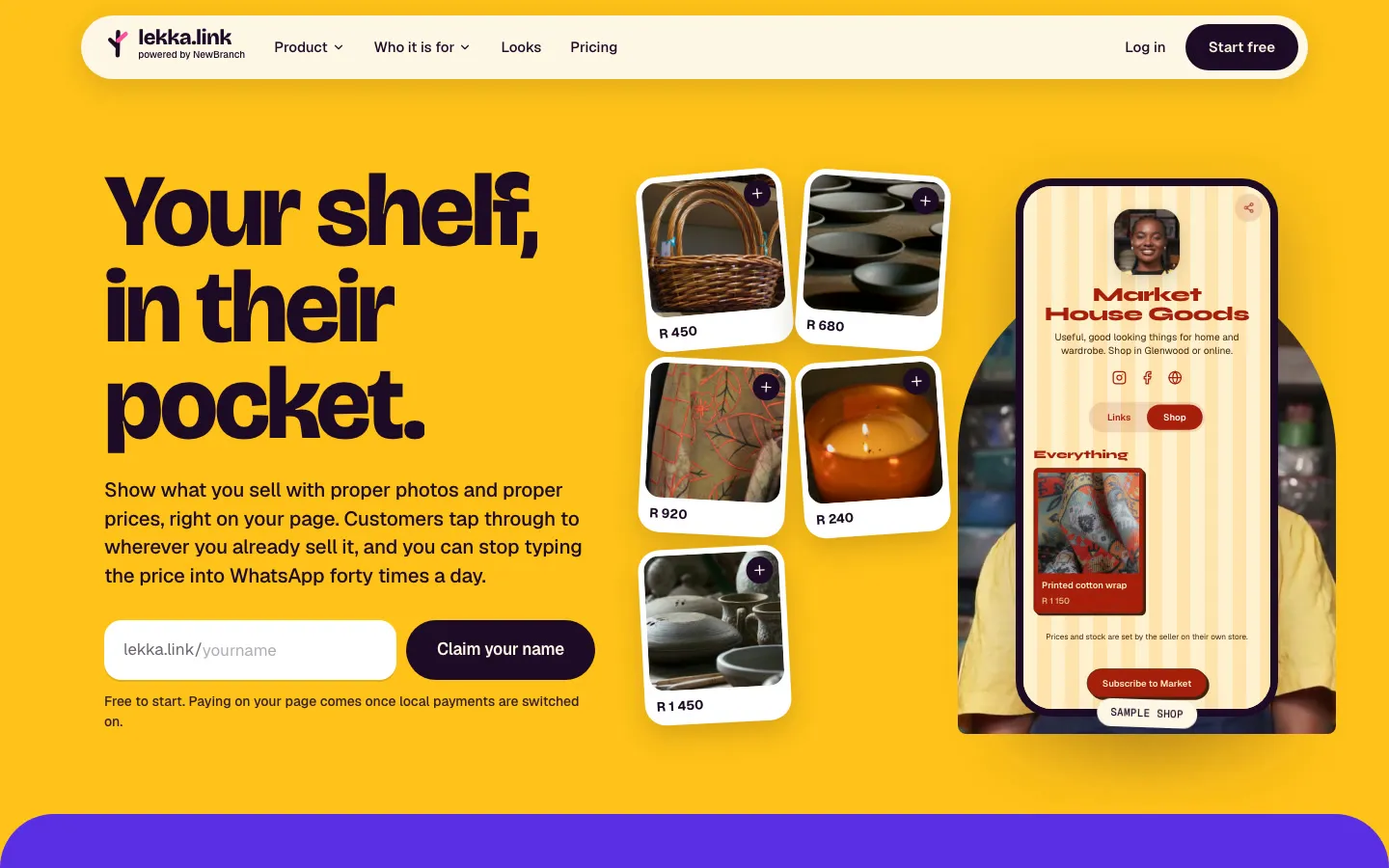
lekka.link shop feature page showing a fictional seller's products and prices in rand
The shop feature page, shown with a fictional seller.
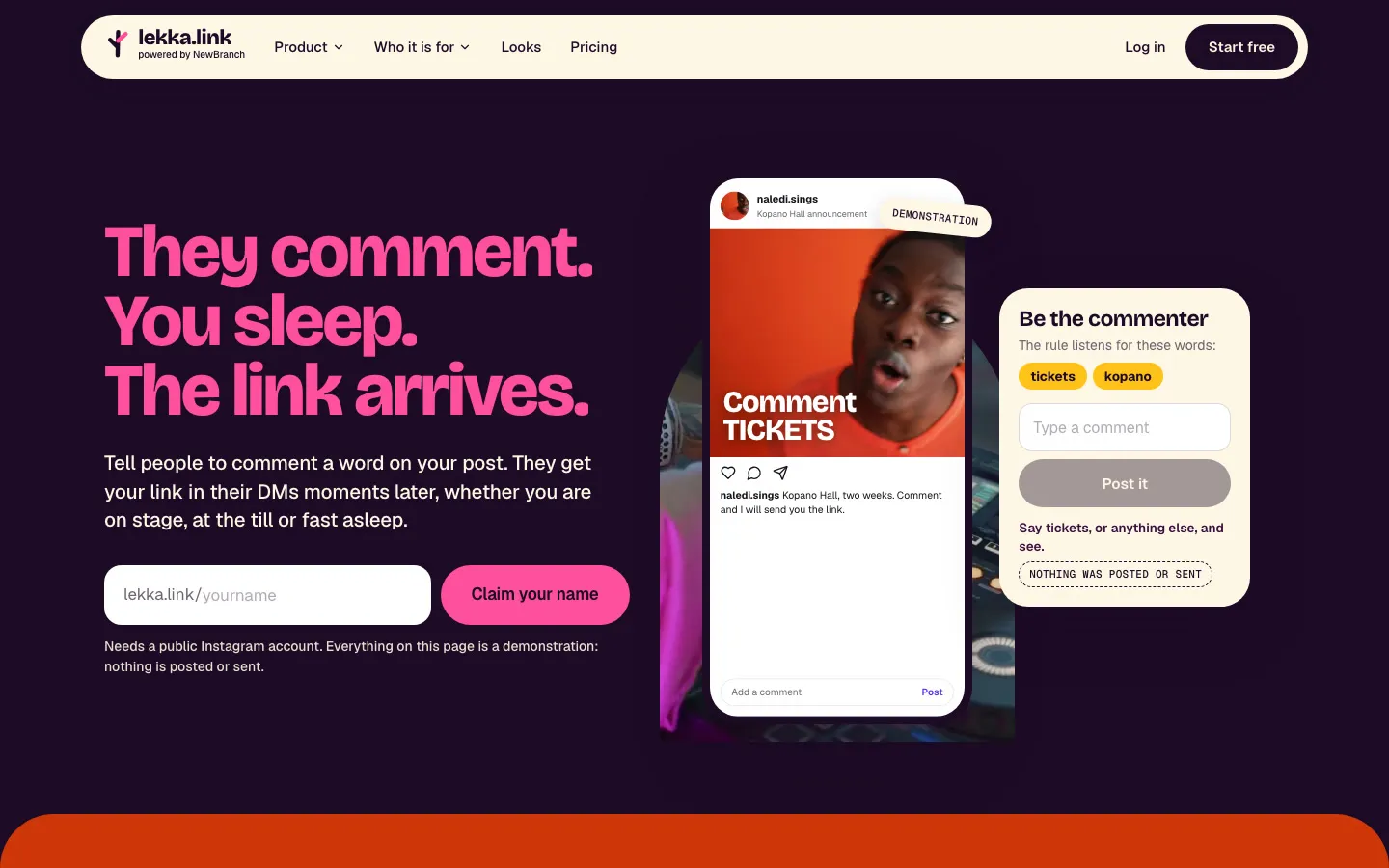
lekka.link Instagram auto-reply feature page with a demonstration comment flow
The Instagram auto-reply page. The automation is built but stays off until it has been tested on a live account.

How it is built

A small modular monolith, designed to be lifted later.

The back end is a Go modular monolith and the front end is React. One binary serves the API, the public pages and the built front end from a single origin, so there is no cross-origin configuration and every cookie is first party. Modules never import each other; they talk through events and background jobs. Their shape mirrors NewBranch's larger platform, so they can be moved into it later.

Data lives in Neon Postgres in Frankfurt, with separate production and staging branches and append-only migrations. Background work runs from a jobs table drained inside the service, with retries that back off from a minute to twelve hours. Each page is stored as one document, while orders, payments, contacts and bookings are ordinary rows owned by their modules. Analytics run through a server-side forwarder that strips personal data first.

Payments

Built so a missed message never loses a sale.

Every amount is stored as whole cents in rand, and prices and fees are copied onto each order at the time of sale. The amount and currency are checked three times: when the payment message arrives, when the order is fulfilled and when a booking is confirmed. Paystack messages are de-duplicated inside the same database transaction, so a replay changes nothing.

If a payment confirmation never arrives, a reconciler checks stuck payments with Paystack every minute and fulfils them, so a buyer is not left with a charge and no product. Refunds check Paystack before retrying, which prevents a double refund. Production accepts only live payment keys and every other environment refuses them.

  1. 01Buyer paysOn Paystack's own checkout, in rand
  2. 02Split at sourcePlatform fee taken, the rest to the seller
  3. 03Message checkedDe-duplicated in the same transaction
  4. 04Order fulfilledAmount and currency checked again
  5. 05ReconcilerEvery minute, catches anything missed
What happens to a single sale.

Reviews

Three reviews, and what they changed.

On 1 November four reviewers used the product as real customers would. They logged 12 issues that blocked launch, 37 to fix before launch and 12 for later. The common thread was screens built for a demo that had never been wired to the API, and demo wording that a real customer would read.

On 3 November a stack review by dimension found two critical issues: one plan advertised features that did not exist, and there was no terms or POPIA notice. Both were dealt with, along with unsubscribe, contact deletion and tax invoices. Security and money were judged fit to go live; the product was not yet fit for a credible public launch. The Go code had 81.6% statement coverage and a clean vulnerability scan across about 71,000 lines.

On 4 November a pre-keys review confirmed the service fails cleanly when vendor keys are missing. It found that paid fulfilment was never retried, which led to the reconciler above. At the last full run, all 1,747 unit tests and 313 browser tests passed.

Brand

South African, deadpan and specific.

We explored six brand directions. The working one, Side Street, uses plain, dry South African English: the joke lands on the hustle, never on the person, with no exclamation marks and no invented testimonials or numbers. The palette is marigold, jacaranda, cobalt, night, cream and hot pink, with no green. Side Street is still awaiting approval, and the product interface keeps a single accent token so it can switch over without a rebuild.

lekka.link pricing page headed free to build, pay when you publish, with four monthly plans in rand
Pricing. Free to build, paid to publish, with prices shown including VAT.
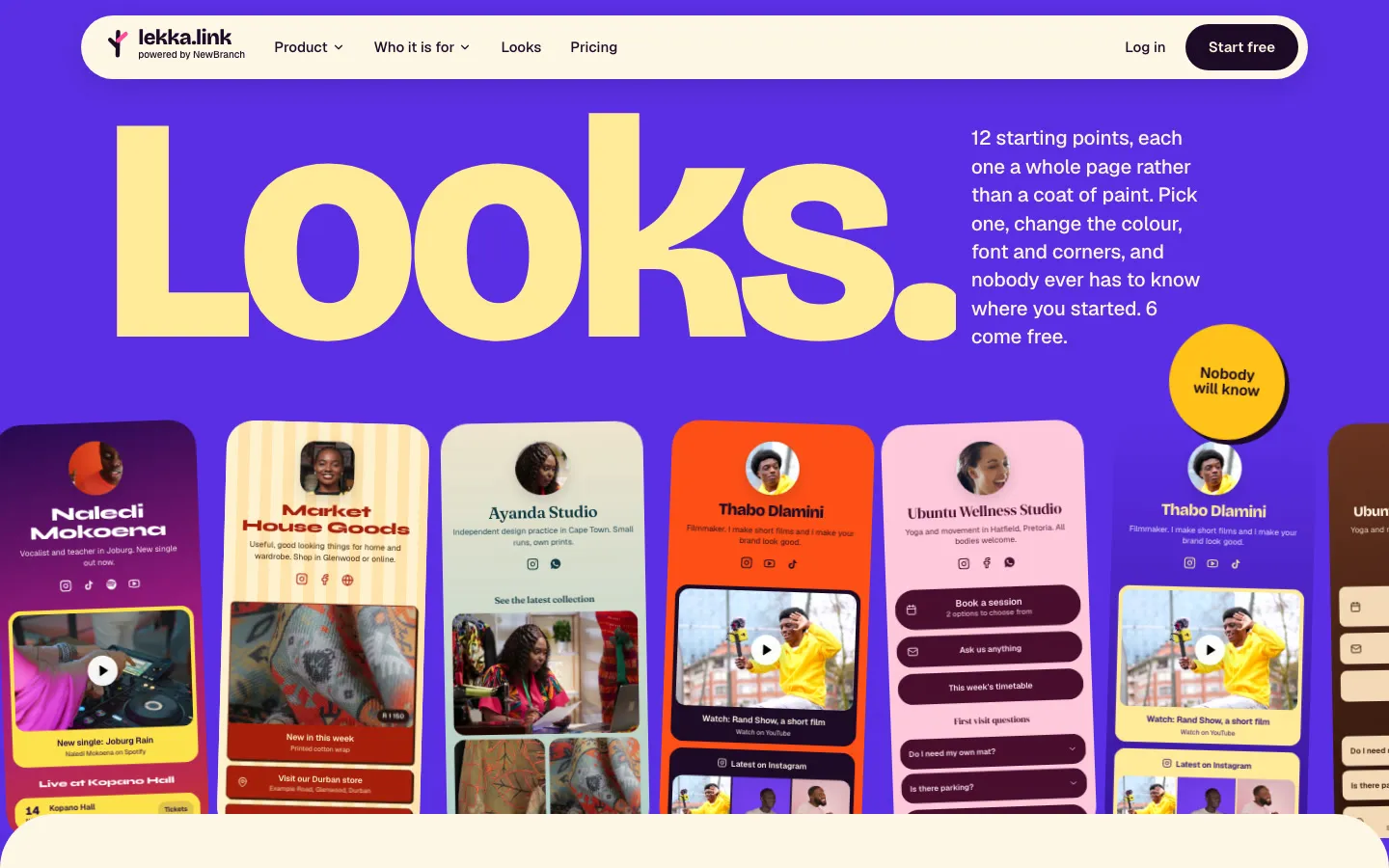
lekka.link templates page showing a row of page designs for fictional sellers
Templates. Each starting point is a whole page design rather than a colour swap.
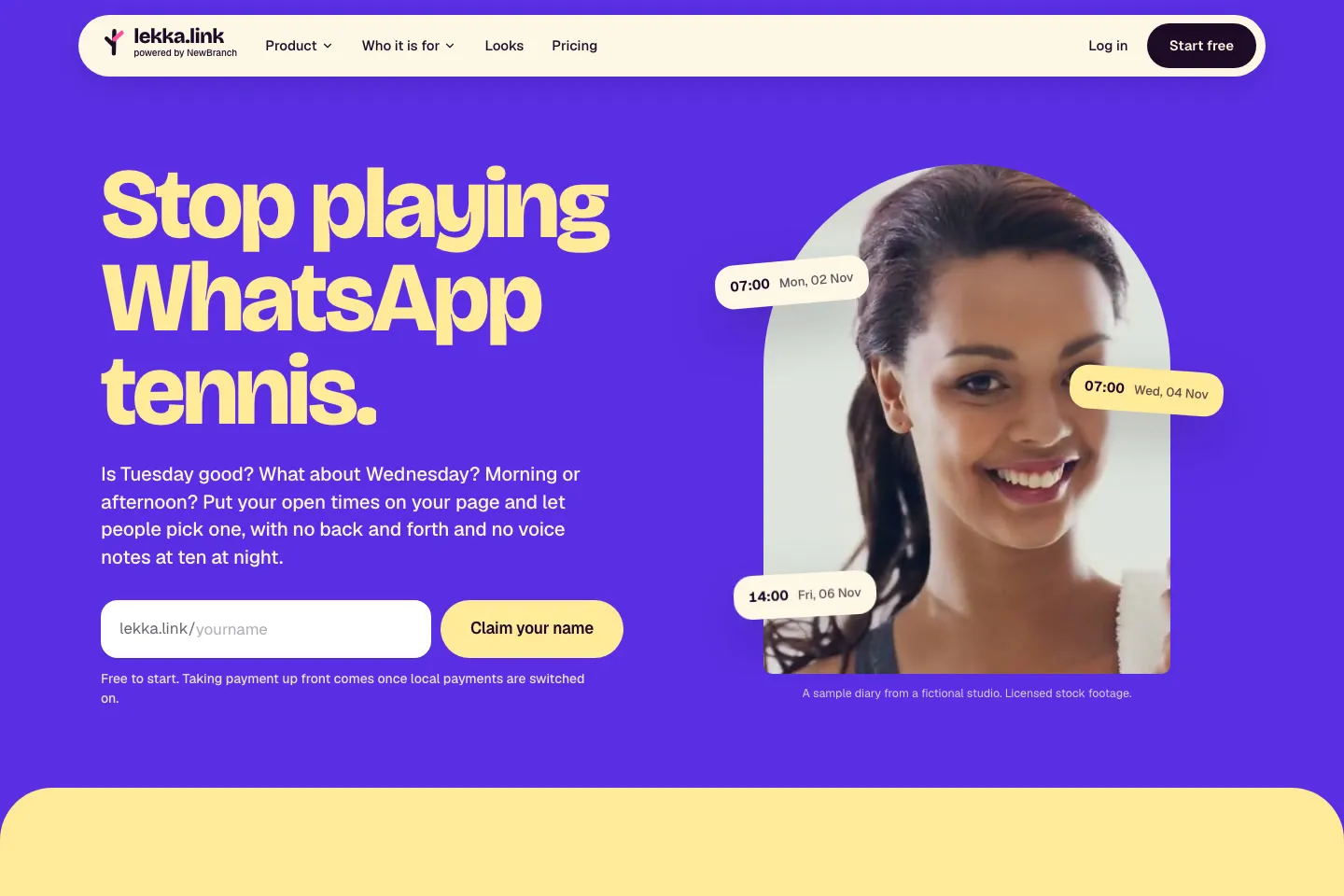
lekka.link bookings feature page
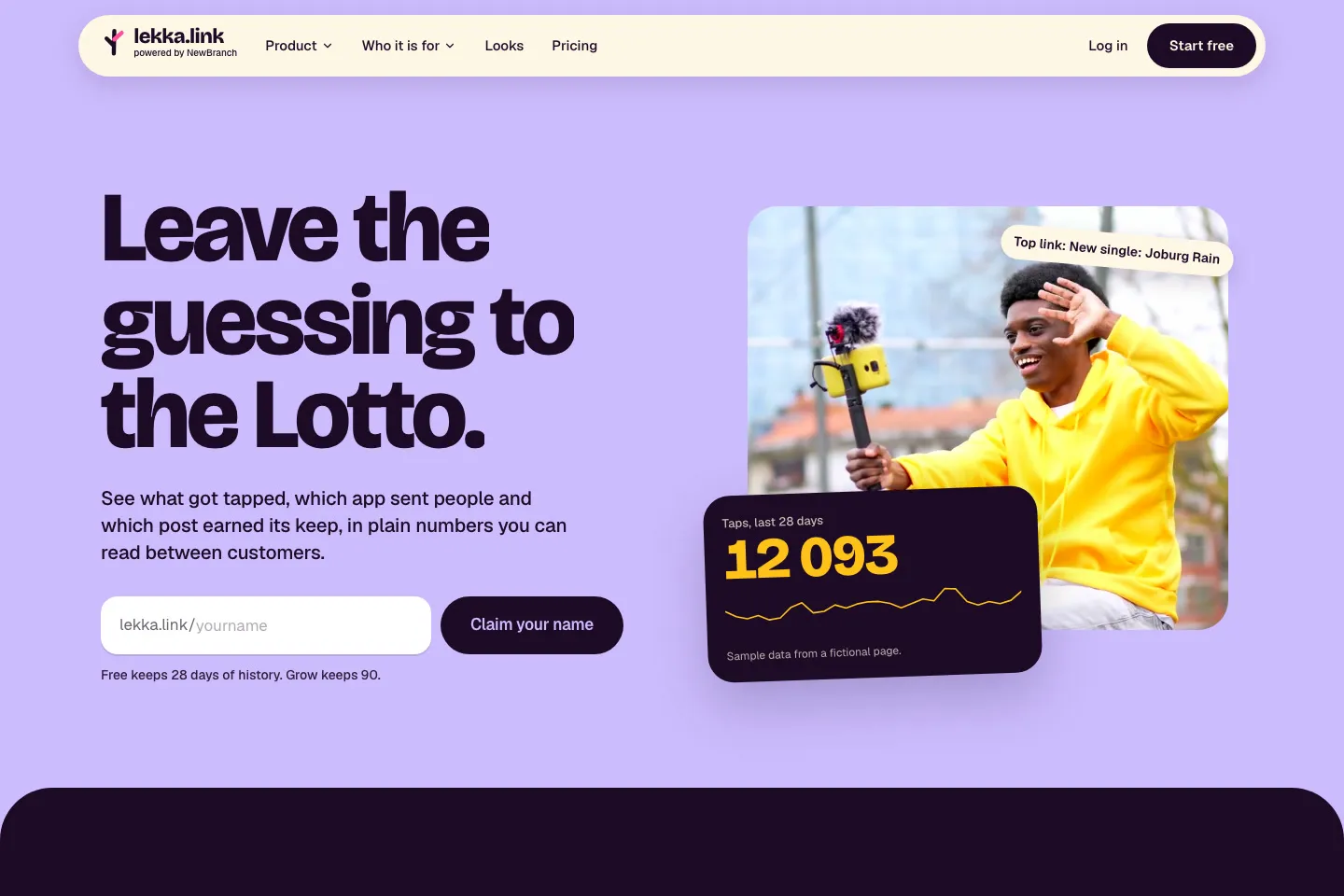
lekka.link insights feature page

Key decisions

What we chose, why, and what it cost us.

  1. 01

    Ship one Go binary, with modules shaped to fit NewBranch's larger platform later.

    Why

    One origin removes cross-origin setup and keeps cookies first party. Mirroring the platform's module boundaries means the product can be folded into it without a rewrite.

    Trade-off

    The platform's heavier governance, including command envelopes, row-level security and code generation, was deliberately left out for now. Each omission has a documented cost to add when the modules move.

  2. 02

    Separate tenants in the application, not with database row-level security.

    Why

    Speed to launch, with a single app serving one kind of tenant. Every row carries the page it belongs to, membership is checked in middleware, and a missing or foreign record always returns the same not-found response.

    Trade-off

    Protection depends on code discipline rather than the database. The stack review flagged a few lookups that rely on an earlier scoped query, and row-level security is part of the planned move into the platform.

  3. 03

    Never hold seller money. Take the platform fee through Paystack's split on each payment.

    Why

    The fee is applied per payment, so a plan change never requires updating the seller's payout account, and Paystack's own charge comes out of our share.

    Trade-off

    Refunds are funded by the seller topping up, the seller carries Paystack's charge on that top-up, and the platform fee is not returned.

  4. 04

    Make missed payment messages recoverable, not just rare.

    Why

    The pre-keys review found that paid fulfilment was never retried. A single lost webhook would have left a buyer charged with nothing delivered.

    Trade-off

    A durable fulfilment record and a reconciler add moving parts, and a missed message can still take around a quarter of an hour to resolve.

  5. 05

    Prevent double bookings with a database lock and ten-minute holds.

    Why

    Two buyers paying for the same slot is the failure a small business remembers. If a late payment arrives for a slot that has gone, the system records a conflict for refund instead of overbooking.

    Trade-off

    In that rare case a buyer pays and is then refunded, rather than getting the slot.

  6. 06

    Go live with payments switched off, and say so plainly.

    Why

    Switching payments on is one key. Until then the product had to be honest and finished. Paid items stay listed with clear wording and a route to the seller, rather than fake buttons.

    Trade-off

    Until the live key is in and a real-money test passes, people can sign up and build but nobody can publish or sell.

  7. 07

    Strip personal data on the server before anything reaches analytics.

    Why

    Email addresses, phone numbers, tokens and card details are dropped from event properties, and social contacts are sent only as a hash.

    Trade-off

    There is no consent banner yet. Whether one is needed is treated as a policy question for the business, not something code should decide quietly.

Where it stands

lekka.link is pre-launch. Production is running with payments switched off. It has passed testing against a simulated Paystack, but it has not yet taken a real payment, and Instagram automation is not yet switched on.

What we would do next

  • 01

    Add the live Paystack key and run the real-money check, with one plan payment, one small sale and one refund.

  • 02

    Set the company's legal and VAT details so plan payments produce proper tax invoices.

  • 03

    Test the Instagram automation on a live account, then switch it on for the plans that include it.

  • 04

    Register the Google and Microsoft calendar apps so calendar sync covers more than Apple.

  • 05

    Close the remaining hardening items from the stack review, including moving rate limits to shared storage before a second instance runs.

  • 06

    Add external uptime monitoring rather than relying on the host's health check.

Written from the lekka.link architecture notes, the launch, stack and pre-keys reviews of 1 to 4 November 2026, the go-live runbook and the brand direction documents. Test accounts and infrastructure details are left out on purpose.